Tag Archives: financialwellness

Holistic Financial Wellness Principles: Principle #4 – Fear is the Enemy of Curiosity

As I started to write about the 4th fundamental principle of Holistic Financial Wellness, I realized that while many of the 6 HFW principles I espouse are more and less applicable in our lives at different times, the need to be able to live comfortably with uncertainty as you make financial decisions that have  significant consequences for your future while also entailing painful costs in the present may be, for many, many people, the most important principle of all right now.

I considered lots of stories and lots of different aspects of making decisions under uncertainty to illustrate what I wrote in Section III of Money Mountaineering, but in the end I decided to address the “elephant in the room” and talk about the two parts of our human nature that can hijack our judgment and ability to make good financial decisions when the stakes are significant and the outcomes are multiple and highly uncertain.

.
.

Hustling Chess, Overcoming Fear and Getting Curious

A few weeks ago, I went to New York City where I visited one of my favorite spots – the park at the south end of Union Square where the chess hustlers make their living charging nominal fees for lessons to those who appreciate their skills and winning money over the board from those who don’t. When I lived in Westchester and worked in NYC in the 1990’s I spent many hours getting to know these unusual characters and was able to learn a few traps and tactics that let me scare a few masters in the weekend tournaments I used to play in during my time in the City.

One of my favorite denizens of that world is a man named “Po” — a wise, funny and fast talking player of near International Master strength who never lets his customers know quite how strong he is. Po has beaten almost all of the current generation of young grandmasters, catching them as prodigies on the way up (e.g. Hikura Nakamura, Irina Krush and many others). To hear him tell it, his “lessons” helped a few future stars learn some practical tricks that fueled their rise to the top.
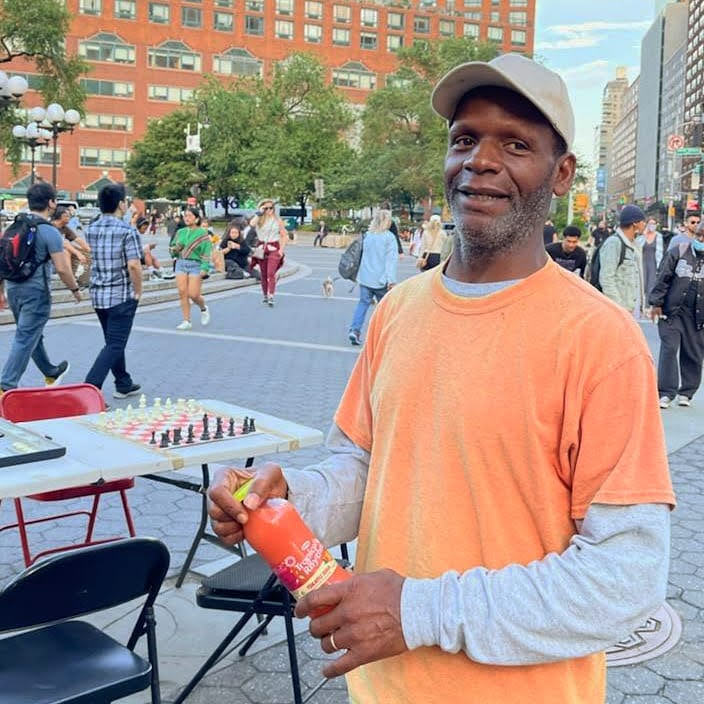
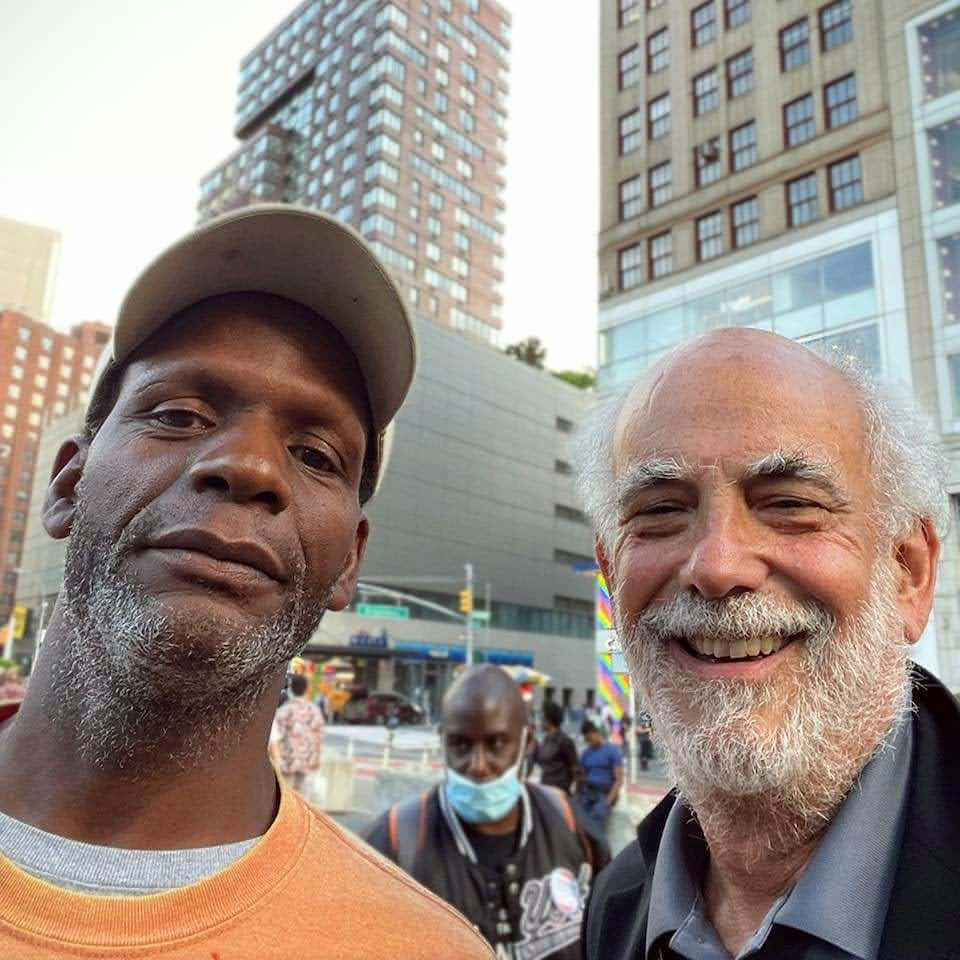
Like many great chess players, Po has a distinct world view and a well-articulated philosophy on how to survive on the chess board and in life. When I asked him what he thought of the current state of the world and what he suggested people do amidst all the confusion and chaos that seems to surround us, he paused and then gave me some wisdom that he passes on to both his friends and his customers. He said that the important thing was to not be afraid – not of your opponent or the all the unseen threats that might lurk on the board. He thought that most people are suffering now because “they opened their eyes and found that it is still too dark to see”.

For me, not only is that great advice, but it highlights perhaps the greatest challenge we face in living with “not knowing” and making good financial decisions despite all the uncertainty of the future and the incomplete information we have about the present.

Decisions over the chessboard are often not that different than the financial decisions I speak about in Money Mountaineering. Both entail making choices whose long term (and even short term) consequences are often impossible to predict and not even a grandmaster will be able to understand all of the aspects of a given position, let alone the plans and strategies hidden within the mind of the opponent sitting across the board. Curiosity and an ability to be openminded enough to consider many possible futures at one time is critical to becoming a good player.

For financial decisions this is even more important. Fear is the enemy of curiosity, and curiosity is what will allow you to identify the important things you can figure out and those that you can only make educated guesses about. It will help you identify the areas where a financial expert can explain aspects of your decision that you need to understand and will allow you to absorb the information that the expert provides. Overcoming fear and becoming curious will help you identify the aspects of your decision that can never be determined and allow you to make better choices.

As I learned from working with Annie Duke, whose expertise is poker not chess, the key is to make smart bets and then recognize that no bet on the future is a sure thing.

So, take it from Po. Even though you might be scared of the dark and can’t see what is down the road, that doesn’t mean you shouldn’t proceed forward, gathering the clues, getting help where you can and making the best financial decision you can with the information you have and the range of possible outcomes that the future presents.

Unfortunately, overcoming fear is not enough, and to truly be comfortable with “not knowing” you also need to overcome at least one other bit of psychological baggage that most of us carry, and for that I want to talk about what I learned from a different teacher.

Marilee Adams and the “Learner Mindset”
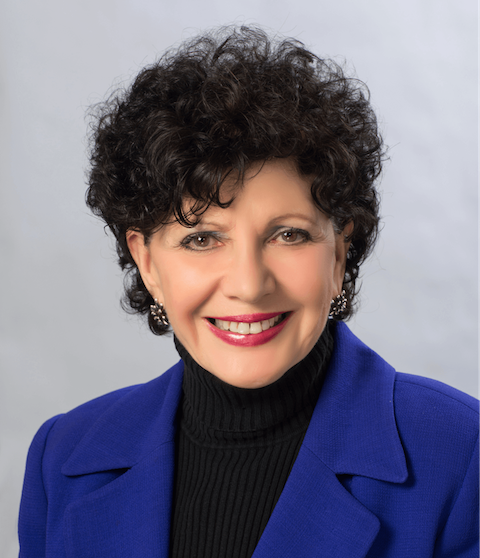
Marilee Adams is a writer friend who I got to know several years ago at a 3-day authors retreat sponsored by Berrett Kohler, the company that published my first book and several of Marilee’s. Marilee’s books have been hugely popular and despite our different statuses in the world of books and book sales, Marilee took an interest in my ideas and gave me a great deal of advice and support all throughout my process of writing Money Mountaineering.

In addition to having had the same publisher for our books, it seems that my suggested approach to the unknowability of the future is quite similar to aspects of Marilee’s advice on how to address uncertainty in general and how to gather enough information to make good decisions. As with many of my fellow authors, I had scanned Marilee’s book, but until this Spring I had never had the time to read it cover to cover.

That changed earlier this year when Marilee invited me to be a guest at one of her 4 week/8 session workshops on how to “Change Your Questions and Change your Life”. I didn’t have to think twice before accepting her generous offer because, in addition to the prospect of getting to watch how Marilee works her magic on large groups who flock to her usually sold-out workshops, I also sensed that her message to adopt a “Learner Mindset” when facing important life decisions might be very relevant to what is embodied in my 4th foundational principle of Holistic Financial Wellness. These two factors made it a very easy decision to devote the minimum 12-hour time investment to attending the workshop.

It turns out that adopting the Learner Mindset is not exactly the same as what I mean when I write about becoming comfortable with the uncertain future, but had I not gone to the workshop I would never have realized quite how important it is not to fall prey to anticipation, a state of mind that can lead you to make bad decisions – particularly financial ones.

Just like fear is the enemy of curiosity, I think anticipation is the enemy of open-mindedness. If you think you know what is going to happen (good or bad), then you can’t be open to the range of possible ways in which the future might unfold. And that is exactly what anticipation is — expecting something specific to happen while closing your mind to all the other possible paths the future might take.

This was not news to me, but during the workshop, Marilee went pretty deeply into what generates anticipation in us and what we should do to not let it bite us. And even though I have thought about uncertainty and how to deal with it for decades, I learned something important from Marilee and am grateful to her for reframing the problem of our tendency to think we know what will happen instead of what might happen in this way. She helped me understand in a deeper way one of the key things that cause us to sometimes lose our ability to think clearly and make good decisions in the face of an uncertain future.

That being said, my philosophy on the subject of uncertainty is, I believe, somewhat different than Marilee’s and in particular, I think we differ in our analysis of what allows us to overcome the fear and other obstacles that keep us from living comfortably in an uncertain world.

This is in no way a criticism of the value of what Marilee provides or the way she does it. For many people, Marilee’s approach to developing a “Learner Mind” is highly effective. The issue for me, however, is that in Marilee’s workshops (or at least the one I attended), there is a lot of homework, and I was asked to work harder than I was prepared to when I accepted her invitation.  For many, I realize that that, by itself, is a good thing, but in this case my personal idiosyncrasies prevented me from getting the full benefit of Marilee’s training.

My problem is that fundamentally I don’t like homework – I got away with not doing much in school and in many cases didn’t see the point of why it was assigned in the first place. My father and I had arguments about that, and like many things, he was more right than wrong in lecturing me for not doing my homework, but still, somehow, I came out ok.

Many believe that our minds can be trained to be curious, and maybe they can, but I think our ability to ask good questions can also come from a different source – specifically the wealth of natural curiosity that abounds within us, and just needs to be unlocked and allowed to emerge naturally.

For me, curiosity and disciplined practice/training just don’t mix, though just like Holistic Financial Wellness Principle #1 states, we are all unique individuals and different approaches to getting better at making good financial choices are appropriate for different people. Many of us welcome the discipline and skill development that Marilee imparts – and she is an extraordinarily good trainer in that regard, but I take a somewhat different approach to my own path to getting comfortable with “not knowing”.

Specifically, I believe that humans are at their best when they get in touch with that wild, playful, undisciplined adventurous side – a side that, if we were lucky, we enjoyed as a child and can still return to. For me at least, that’s where my curiosity lives.

So how do you get more curious and want to ask the questions you need to ask – about your job, your 401(k), your bank, or even cryptocurrency? I don’t believe there is a single answer to that question, but my approach is different than Marilee’s. Rather try to train myself to be curious, I simply listen to my own inner voice and pay attention to what I hear. Am I falling prey to anticipation when I think I know what is going to happen? Is it fear which keeps me from thinking about what might happen? Or is it a combination of both – throwing me off track as I hear myself say “I am afraid and don’t want to think about what I am sure will happen (in the market, the economy, my company, and even my family).”

It is also important to realize that being curious won’t necessarily help you to figure out what will happen next. Fundamentally, to make good financial decisions in an uncertain world, we need to remember that while the future is unpredictable it is not unimaginable. Being curious and open-minded is just the first necessary step towards financial wellness.

In the end, I believe that Marilee and I agree completely that to make better financial choices you need to be curious enough to ask the right questions and open-minded enough to listen to the answers.

That is what the Holistic Financial Wellness Principle #4 is all about.

Holistic Financial Wellness Principles: Principle #3 – Due Diligence

In my essay earlier this month about Holistic Financial Wellness Principle #1 I talked about the need to adapt to changes in your own financial or life situation to make sure the financial decisions you make are consistent with who you are and how you are situated in the world around you. In that essay, I talked about how the wildfire that destroyed my home last year and changed the way I now look at the decisions I make around money and the things I buy with it.

Today I want to talk about a different kind of change that is happening in the world around us and how it impacts the application of Holistic Financial Wellness Principle #3. That principle continues to be valid, but I believe that the way it should be applied, as I describe in Money Mountaineering, needs be expanded somewhat to accommodate the way the Economic/Investment/Advisor environment has changed in the last few years. The changes I speak to are not directly related to the pandemic, but have been emerging over the last few years, and, in my opinion, have recently become too important to ignore.

.

.

The importance of due diligence in an imperfect world

“ You know something is happening here but you don’t know what it is . Do you Mr. Jones?” – Bob Dylan  from “Ballad of a Thin Man

Like many others, my year of COVID isolation included getting to know (via Zoom) a lot of interesting people I would not have met otherwise, and Anthony was one of the more interesting. Anthony is a mortgage broker who makes his living from the commissions he collects on helping his clients obtain loans on the properties they own or are trying to purchase. On paper, he is exactly the kind of person, HFW#3 counsels being cautious of since it is pretty clear that his compensation is directly a function of the transactions he facilitates, and almost by definition his financial interests will not be completely congruent with those that he advises.

While that general advice is still valid, the significant and largely unseen changes that have occurred in the home loan market since the Financial Crisis and Housing crash a decade ago and a recent conversation with Anthony have caused me to reexamine and see that I need to expand on the last part of HFW#3 which says “…make sure those you hire are 100 percent on your side.”

Anthony is a member of what became a weekly discussion group consisting of myself and a group of mostly tech and finance-oriented individuals scattered across Northern California who a mutual friend organized during the pandemic when we all had time to think, converse, and think again. The topics we discussed each week were wide ranging and often quite personal. Throughout the Spring, Summer, and Fall of 2020 we got to know each other quite well, and though we no longer meet regularly, we have all come away with a better appreciation of the wider world of finance and technology that we each operate in.

The focus of our weekly discussions tended to move from person to person (there were 6 of us) and a few months after we started, I sent my new friends a near final draft of my book manuscript to help them to get to know me better and to collect their feedback which I knew would be both honest and helpful. I was not disappointed, as the feedback I received from all 5 helped make Money Mountaineering a better book. But while the others in the group validated and fully endorsed my 6 principles, Anthony told me that he thought HFW Principle #3 was wrong – at least when it comes to getting a mortgage for your home.

Not used to being told I was wrong, I got very curious. What exactly did I miss? He was happy to explain, and I wanted to very much know where he felt I’d made a mistake, but first I wanted to hear more of his professional story.

Anthony told me that in 1995, after a few false starts working for large commercial real estate firms he decided to sign up for a seminar given by Suze Orman, who was still personally conducting all the workshops on financial literacy that she designed and was beginning to write books about.

In Money Mountaineering, I tell Suze’s story, and it is a complicated one. While I believe that Ms. Orman’s books, and pronouncements today are likely to cause more harm than good, back in the mid 90s Suze Orman was teaching a lot of people how the world of money worked, and from everything I know about her, she was a good and caring person who truly wanted to help people do better with what they had. For Anthony, learning the fundamentals about how the world of money works by attending Suze’s seminar was a turning point in his career.

Shortly after completing the workshop, Anthony became a mortgage broker, and knowing too well the suffering that too much debt can cause, he steered his clients into loans that were responsible, prudent and designed to help his clients achieve their home ownership goals without putting their financial futures in peril.

From 1997 through the housing crash of 2008-9 and until today, Anthony has been guiding his clients on this path, never letting them get overleveraged, focusing on “education and trust” believing that a client who understands the debt he/she is assuming and can trust the expertise of the broker who is facilitating the loan, will make better decisions and will be happier for it.

What Anthony took issue with when he read my book was my contention that when it comes to mortgages, the compensation of the expert that we each must use to get our house financed is the most important factor for someone to consider. One of the recommendations I give in Money Mountaineering is that individuals should consider moving their retirement savings (IRA’s, etc.) to a big Bank that use a “relationship model” where they will have access to experts when they need them and in particular, can use loan officers who are paid a salary and do not receive commissions based on the loans they place.

Anthony pointed out that while that may have been true in the immediate aftermath of the Financial Crisis when Banks needed to restore trust in both their solvency and the people who provided financial services to their customers, it is not nearly as prevalent today as in the last several years. Many big banks have changed their business model and have become much more “transactional” in their approach to making loans and accumulating assets and liabilities for the firm’s balance sheet.

In addition, Anthony suggested that the “proprietary products” that the big banks offer their “premiere customers” (another recommendation in Money Mountaineering) are not necessarily that much better than the best loan that can be obtained from the wide array of lenders that a good independent mortgage broker like Anthony can find.

I think Anthony makes a very good point about the changing nature of how big banks do business, though at least in my experience, the best loans I have been able to attain for myself were still those given by my banks to their “premiere customers” and though that competitive advantage may disappear over time, it hasn’t yet.

On the other hand, I think Anthony’s experience and observations highlight a much more important aspect of how our world has changed. Specifically, in order to apply HFW#3 when it comes to finding an expert who will be compensated for the help they provide, you need to do your due diligence.

It’s Not Just Mortgages

One of the joys of being a writer is the opportunity to meet other writers and thinkers in your field who write good books. The first of my favorites is “A Capitalist’s Lament” by Leland Faust

and the second one is “The Big Investment Lie” by Michael Edesess

Leland is a top-notch tax lawyer and Michael is a serious mathematician, but both have worked behind the curtain for firms that provided investment advisory services. Then they both wrote books pulling the curtain back and letting their readers know exactly how Wall Street deals with the individual investor. They are not whistleblowers, but they are both truth tellers and that is something very valuable these days.

The truth about what goes on behind the scenes when we try to invest our money in a prudent way is sobering.

The sad fact is that the business models of almost all financial service firms seems to be getting opaquer and it is becoming increasingly more difficult for a consumer to understand what they are paying to whom and for what. Forget all the noise around Robin Hood, just consider the “zero commission” investment brokerage services that some giant well-established firms now use to lure investors to move their money. Here is a promise from Charles Schwab that you will be able to invest your money for “free” and yet still receive the benefits of the expertise and help a giant firm like Schwab can provide: schwab.com/pricing.

I have not taken the time to dig into exactly how Charles Schwab makes money on these “no fee” accounts, but I think it is almost a sure bet that Schwab is not doing this simply to provide the public with service that does not financially benefit them in some unseen way.

So, when you apply Holistic Financial Wellness Principe #3, make sure you do your due diligence.

It is not enough to just look at compensation structure of the experts from whom you seek help. These days it is too hard to “follow the money”. In the mortgage business the distinction between a commission and a “performance-based bonus” is getting too blurred for an outsider to discern without a great deal of analysis that almost no one has time for, and if you are dealing with an investment firm on the asset side of your balance sheet, following the money is exponentially more difficult.

On the other hand, the expert that you will need to turn to for help is, at least today, a human being and so, more important than the alignment of their compensation, it is the good will of the person(s) providing the help that you need to discern to know, not just whether an expert is 100% on your side, but to the extent they are not (and many times they are not), what of their interest you are competing with.

These days it is getting harder and harder to know what is happening behind the scenes in all areas of life, but at least transactions with money (and debt) are still executed by people, and therefore it is important to understand and learn as much as you can about the motivation, the expertise, and the good will of the people you will need to help you manage your financial life.

Many times, you will find that it is not all about the money, and as confusing and impenetrable as the wilderness is, it is still possible to find trail guides like Anthony who you can trust to guide you through the woods.

Before we ended our last conversation on the mortgage business, Anthony told me that he ascribes much of his success to the fact that he always took the time to get to know his clients as individuals– not just their financial situations, but who they were as people and what their goals, desires and fears were about the home they were about to purchase. He is not alone in wanting to get to know his clients as almost all financial services firms want to know as much as they can about the person who seeks their help, but I believe that due diligence works both ways and even if it wasn’t a part of HFW Principle #3, I think you will get better help and have fewer problems if you get to know the person who you have let into your financial life. 

Specifically, after you have determined that you actually need help, by all means try and find an expert whose financial interests align with yours and who you believe is on your side, but then try and go further. Get to know the person who you are going to for help, listen to their story of why they want to help you and try to understand what their real agenda is. Ask personal questions and make sure you listen carefully to the answers they give. In a perfect world we would be able to hire experts who are clearly and unequivocally on your side, but unfortunately the world is not perfect and getting less so every day.

Holistic Financial Wellness Principles: Principle #2 – Debts of Gratitude

This is the second in a series of essays on the 6 Foundational Principles of Holistic Financial Wellness that I describe in my new book “Money Mountaineering”. In this one I want to talk about “Debt” in a more general sense. As we look at our personal financial balance sheets we have many obligations that might be satisfied by money, but many of those obligations were incurred through the receipt of goods, services that are often not measurable in dollars and that the terms of repayment are far from clear. How to view these debts and how they affect one’s financial well being is a very tricky issue and whole books could be written on the subject.

My goal here is to simply bring your attention to those liabilities and to both caution you against ignoring them, as default can lead to real financial problem, while at the same time recognizing that many of these liabilities can be satisfied using other assets at your disposal thereby contributing in a meaningful way to your overall financial well being.

.

.

Keeping the lights on with home cooked meals.

My neighborhood in the old West End of Santa Rosa is filled with old houses in serious need of repair. Many of my neighbors rent these houses from landlords who take a “just in time” approach to the maintenance of their properties or in some cases live in houses that are owned by family members who live in different towns.

Many of these neighbors come to me for financial advice and among the more difficult questions that they ask me is what to do when the material things in their lives break and need to be fixed so that they continue to work and have the basics we all need to survive (shelter, light, heat and running water).

It turns out that my actuarial training and facility in financial analysis is of limited use in solving their problems. Instead, an expanded view of what they need and what they have to offer others is required.

My friend Linda lives down the block from me in a house that is well over 100 years old. While the foundation, plumbing, and electrical systems are not quite that old, the house is in sore need of renovation.

The house is owned by another family member – Grandpa Joe who lives 60 miles away and is, himself, getting on in years, relying on the already reduced rent that Linda pays him to supplement his small pension and Social Security.

It’s not that Joe and Linda don’t have material assets that theoretically could be used to make the house safe and livable again. After all Joe owns the house and has only a minimal mortgage outstanding while Linda has accumulated 50 years’ worth of antiques and collectibles that these days have considerable monetary value. The problem is that converting those “real” assets into dollars is easier said than done, and when I looked at their situation, the numbers simply didn’t work.

However,  both Joe and Linda have many other assets that can be brought to bear on the problem. In particular, they each have many relationships that are extremely valuable. Specifically, Joe has many close friends who are skilled tradesmen (plumbers, electricians, carpenters, etc.) who are always looking for “side jobs”, and while Joe does not have skills that can be used here (he is a locksmith by trade), with these contacts, he was able to very quickly arrange for the house to be fixed. Many of these tradesmen have had their businesses helped by Joe and as a result are only too happy to pay off their “debts of gratitude” by coming by and assessing what work is needed to be done.

For her part, Linda is a spectacular cook and her holiday dinners are legendary among those who have been lucky enough to have attended one. And good food is only part of the reason that an invitation to Linda’s house is so sought after. The history, art and relics that fill Linda’s house are just as nourishing and tasty as the food she serves. Neither Joe nor Linda have the financial wherewithal to pay the cost of what typical home repair companies charge, but between the lunches, dinners and stories that the two of them provide, the crews that come to work on the house always feel well compensated for the services they provide.

And so, having had to admit that some problems can’t be solved with  actuarial analysis, I watched with fascination as a succession of vans and trucks came and went to Linda’s house while small crews of electricians, plumbers and carpenters rewired the house, upgraded the kitchen and replaced doors and drywall throughout the house, while the din of power tools, late 60’s music, and happy voices emanated from the little green house down the block beginning early in the morning and lasting until well past sunset.

It’s one thing to look at a Gift Economy from a distance and consider it as a system that may or may not be a viable alternative to one based on a free market principles. It’s quite another to watch it in action. Many believe in the Gift Economy and are trying to design and implement one for communities and organizations. I applaud that effort and hope that such efforts succeed, but I also think that change like this happens from the ground up, and just needs to be recognized and encouraged to grow whenever it naturally arises.

The truth is that all of us already participate in a Gift Economy in our own lives, even if it only encompasses what we do for our own families and close circle of friends. We all give to those we care about and we all owe debts of gratitude to those who have given to us.

So how do we account for these “assets” and “liabilities” on the karmic balance sheet of life? I would suggest that we don’t even try to measure them, but instead that we simply recognize when such obligations exist and understand that evening the scales will take time, energy and even sometimes “real” money, and that “investing” in giving to others will often yield a return that is far greater than any financial analysis will reveal.  In my opinion, the sooner we recognize that such non-monetary  exchanges of value are taking place and consider the gifts we give and receive as part of our overall financial situation, the closer we will come to achieving true holistic financial wellness.

Holistic Financial Wellness Principles: Intro and Principle #1

Introduction to Essay Series

In Money Mountaineering I describe 6 Foundational Principles that I believe everyone should keep in mind as we all strive for  financial well-being. This essay is the first of a series that explores each of these principles in greater depth.

Some of these principles may seem counterintuitive, and I hope that by reading my book you will become convinced that they are both sound and can be helpful. The first of these principles does run counter to conventional financial planning wisdom which is full of general rules and recommendations for what you should do with your money. I believe this is wrong, and that, to paraphrase the words of my good friend and brilliant actuary Charlie Commander –“if you have seen one financial plan, you have seen one financial plan” .

In this first essay, we talk not just about how individualized our circumstances and goals and plans should be but how important it is to stay aware of how all the factors that are relevant to your plan can change—either because you change or the world around you does.

.

.

Holistic Financial Wellness Principle#1 – Adapting to Change

“Everything changes a little as it should. Good ain’t forever, and bad ain’t for good” –  Roger Miller from “Lou’s got the Flu”

I learned a lot from my mathematician father and as many lectures as he gave me growing up, there was almost always music playing in our house. Roger Miller’s songs formed the soundtrack to many of my childhood Sunday afternoons.

I always listened to the words of the songs and from the men and women who sang them I learned even more. As rigid and clear as my father’s views and teachings usually were,  he was always open and curious about the world around us and how it can change – in unpredictable ways that can render one’s normal survival strategies a recipe for suffering.

As a precocious child in the 1930s and 1940s, my dad watched as the world run by the grown-ups got turned inside out and upside down for reasons that people still argue over. Geography must have been a particular challenge for his elementary school teachers. World maps, only recently revised to reflect the geopolitical shifts caused by World War I, became a moving target.  Whole fields of study had to be modified on the fly to keep up with events, while only the oldest and most solid of academic subjects remained the same. And this not even considering the socio economic and geopolitical changes that were occurring in real time disrupting normal life outside of school.

The list of academic subjects unaffected by World War II was relatively short.  Astronomy and science where new discoveries come more slowly could be considered one. Ancient history and Classic literature were perhaps two others with the long lead time between the writing and the recognition of a work’s value, but the most unchanging of all fields was and  always has been mathematics.  That is a very good thing since it is through mathematics and mathematical thinking that we can understand the changes themselves.

We are not in a time of war, but whatever changes this country is going through now, they seem as dramatic to me as any I have seen in my 64 years on earth, and I feel grateful to my father for having passed on to me the wherewithal to use a mathematical lens to consider what is happening around us.

I am an actuary and not a mathematician and so, haven’t used the gifts he gave me in the same way as he did. Rather than attempt to climb the highest peaks of mathematical abstraction as he and his colleagues have, I chose to concern myself with the more mundane world of Money. It is an area where I can use the skills he taught me to separate the signal from the noise, and it is an area where I think some of my insights can help others.

In Money Mountaineering I lay out 6 Foundational Principles of Holistic Financial Wellness. The first is:

HFW Principle #1: Every person’s values, objectives, and financial situation are unique and multi-dimensional. Therefore, make every financial decision consistent with who you are, considering the totality of your own specific financial picture.

Putting aside whether “who you are” is changing as the world changes around you, to apply this principle effectively, it is critical to understand and be clear on your “values, objectives and financial situation”. Reading Money Mountaineering won’t help you determine whether and how your values have changed – but the tools I provide might help you better understand how your financial situation and its relationship to the financial world in general has changed, and by understanding that, you can, if warranted, take a fresh look at your objectives – where you want to hike, climb or camp in the financial wilderness.

In Money Mountaineering I described in some detail my own financial situation and the complicated set of investments and income generating ventures I was involved with, but things change – and sometimes, as Roger Miller says, “everything changes”.  In my case it was almost everything and the changes were far from “little”.

For me, losing my home and everything in it in a wildfire that raced through my part of the world 9 months ago was just the beginning. Now, instead of living on 8.5 acres in the relative solitude of backcountry Sonoma County,  I live near downtown Santa Rosa in a rented house that I have filled with a mix of new rental furniture (provided by my insurance company) and well made, used furniture that I purchased from local merchants or received as gifts from friends and neighbors. I have also begun to replace all the books and technology (phones, appliances, etc.) in my life so I can be more engaged with the larger world around me.

That process has been both transformative and educational as I have developed connections with dozens of local merchants and neighbors who are now an essential part of my new situation.  I am the same person I was before the fire, but my network of friends is different as well as the community that I am a part of. And those changes have had a large impact on not just my financial objectives but what my hopes, dreams and fears are about the future.

On top of that, I see the economic and the financial markets undergoing dramatic change as well. These kinds of changes are much more familiar to me as I have been watching markets evolve and change continuously for over 40 years. Not that the environment is exactly like anything I have seen before, but the forces at work are, at least to my eyes, the same as they’ve been for decades.

So what does that mean for the financial steps I plan to take in the near future? Well, the first thing I am doing is placing a higher value on real assets than I have in the past. Much of the furniture I purchased (or was given to me) is old and not only useful, but in many cases is better made and more durable than what I can get new. Not only that, but with inflation apparently increasing (perhaps as a result of the Fed’s heroic efforts to avert a financial collapse by flooding the economy with trillions of dollars) I believe that my new acquisitions are likely to increase in value rather than depreciate as most new things often do. In terms of my invested assets, I am therefore shifting some financial assets into collectibles that I like having around like comic books, coins and old books.

More generally, I am now recognizing that the relationships I have with my community in Santa Rosa are among the most precious components of my life that exist.  I am learning how to nurture and grow those relationships and one of the best ways I have discovered for doing that is through giving and receiving gifts. In Chapter 15 of my book I make a case for the “gift economy” and now for the first time in my life I am getting an opportunity to participate in one that is growing here in my new neighborhood in a way that may bear some surface similarities to the parking lot of a Grateful Dead concert (the gift economy I am most familiar with) but is on a larger scale and potentially more sustainable and permanent than a caravan of buses following a band from town to town. Whether a gift economy can take root and grow in something as large as a city or a county is a question that I don’t know the answer to, but right now I am simply adjusting my financial plan to the realities in my environment and the new financial situation I find myself in.

I hope this essay will give my readers a fuller understanding of HFW Principle #1. In particular, it is important to know that using this principle is not a “set it and forget about it” proposition, but rather a step that once undertaken must be reviewed periodically as you and the world around you change.  In future essays we will take a deeper look at the other 5 principles, but consider this as me sharing my first step back towards holistic financial wellness. I am glad to have you along for the journey.