Tag Archives: Finance

Holistic Financial Wellness Principles: Principle #6 – Optimism Bias

For this, my final essay on the principles of Holistic Financial Wellness, I need to disclose some aspects of my life that in normal circumstances I would never consider writing about and posting where strangers can read. I do so, however, because throughout Money Mountaineering and in the previous 5 essays, I have not shied away from sharing aspects of my life that bear directly on the issues I am discussing. To not do this now, would be the height of hypocrisy.

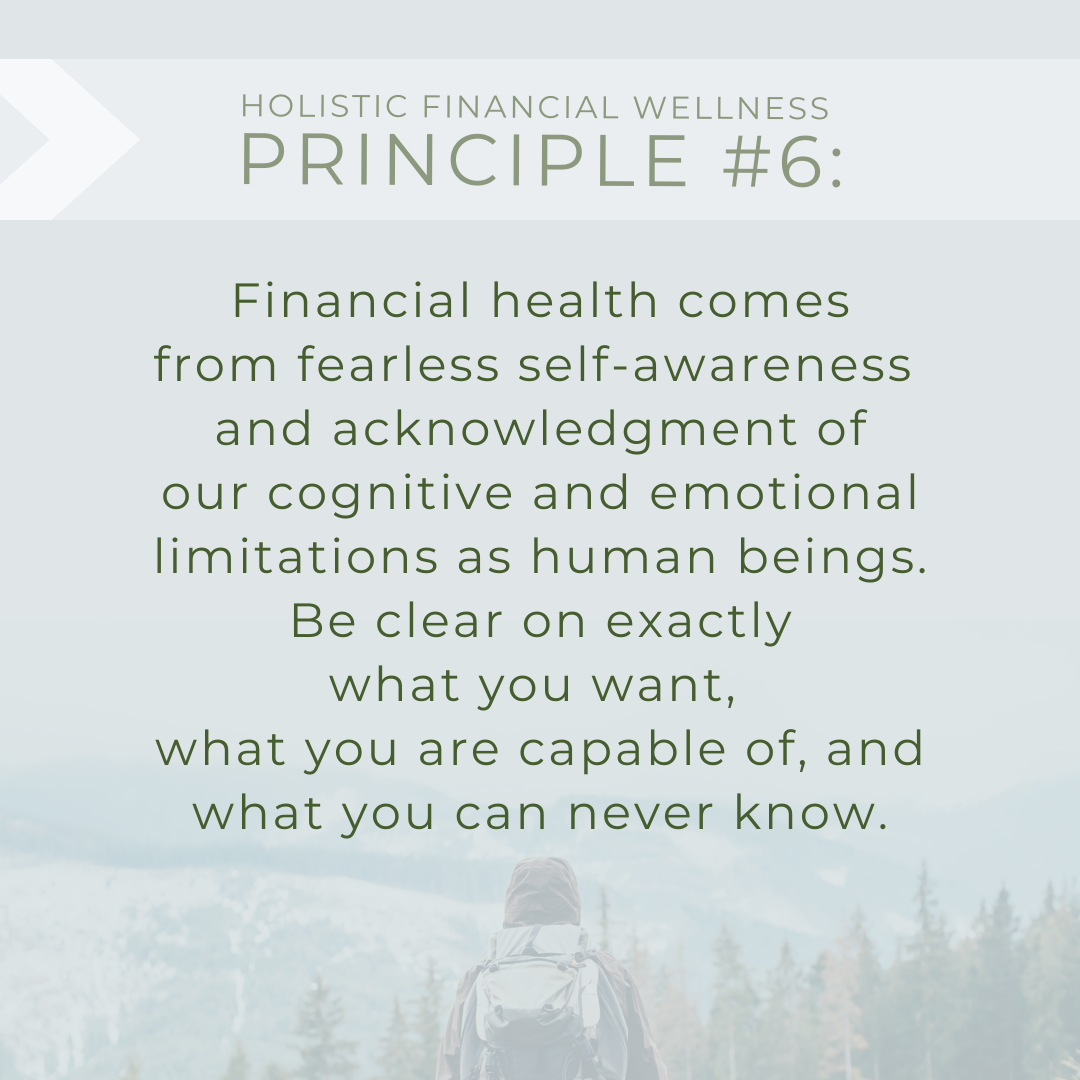
HFW #6 is all about our irrationality and the blind spots we all have when it comes to making important financial decisions. It advises you to strive for “fearless self-awareness” and to take note of our limitations when we consider our own situations and the areas where we may need help. So today I want to walk my talk and share one of my blind spots that has disrupted my financial life, and unfortunately was not explicitly addressed in Money Mountaineering.

In What’s Your Future Worth? and in Money Mountaineering, I have expressed my view that predicting the future is impossible, but imagining it is not. In fact, my recent essay about HFW#4 addresses this directly by noting how important it is not to anticipate what the future will hold, but instead we try to imagine what might happen and then prepare for it. In my most recent essay on HFW #5 I counseled that you follow my father’s advice and “hope for the best but prepare for the worst”.

And while I have generally been able to adhere to the 6 principles I espouse, my financial life was recently upended by one of the most important financial contingencies out there that affects several hundred thousand of us every year and millions overall. In retrospect, I wish I would have included at least a brief discussion of it in Money Mountaineering, but for reasons that will soon be apparent, I didn’t.This essay is my attempt to rectify that omission, while at the same time expanding on the notion of what I mean when I say that financial wellness requires that we “acknowledge our cognitive and emotional limitations as human beings”.

.
.

Optimism Bias and a Failure of Imagination

In Chapter 11 of Money Mountaineering, I describe what I consider to be the most important emotional biases and cognitive errors that we can fall prey to when we make financial decisions. In preparation for writing Money Mountaineering, I reviewed much of the Behavioral Economics literature and discovered that in the years since I had been immersed in the subject, many more “system bugs” in our make up had been discovered and explored. To make the book as useful as possible, I decided to focus on what I considered to be the most important and “dangerous” aspects of our “programming errors” that can prevent you from making good financial decisions.

In the book I describe 8 emotional biases and 7 systematic cognitive errors that we are all prone to, but I left out one emotional bias that not only is important but is also one that I recently fell prey to in my own life. Ironically enough it was probably this bias itself that caused me not to explicitly address it anywhere in the book, and it is one which I want to talk about now. Specifically, I am referring to what is called “Optimism Bias”.

Optimism bias is a bias that “causes someone to believe that they themselves are less likely (vs what the actual probabilities are) to experience a negative event” (see for example https://en.wikipedia.org/wiki/Optimism_bias). While this bias has been observed by psychologists since the 1980s, systematic analysis of this bias only began in the last 20 years (see for example http://www.crossingdialogues.com/Ms-A14-09.pdf).

I doubt that adding one more bias to my Chapter 11 catalogue of our emotional biases and cognitive errors would have made for better reading, but still, I regret not discussing it – especially because the financial consequences of optimism bias can be significant.

Right now, I am suffering the consequences of what can happen if you ignore the full range of unpleasant ways a decision might turn out. Fundamentally, I experienced a failure of imagination and I want to talk now about how it happened.

Time Traveling and Imagining a Painful Future

In the last chapter of my first book What’s Your Future Worth? I describe the first conversation I had with my wife about our respective personal balance sheets. It happened on our very first date as we were getting to know each other, both of us very much realizing that we liked each other very much. We disclosed our financial situations to each other — my significant accumulated assets and her bright red ledger full of student debt accumulated in pursuit of her Ph.D.  I had no doubt in my mind that pursuing her was the right thing to do, and in the book, I describe my thought process (clouded by emotional biases of all sorts as it undoubtedly was).

That initial conversation took place in 1995, and the next time we addressed the subject was shortly before we got married at the end of 1998.

In that second conversation a few months before our wedding date, my bride-to-be asked me whether I was going to ask her to sign a pre-nuptial agreement to deal with the wildly different financial situations we were bringing to the marriage.

This question was, in one sense, not about money, but in another sense, it was only about the money. In fact, it was a very specific question about what would happen to our money during the marriage, and more importantly – what would happen to our money if our marriage did not survive.

It was not as if I hadn’t thought about the question. I had. In fact, I had thought very deeply about it and when my fiancé asked the question, I was not the least bit surprised.

Before I tell you how I answered her, I need to first acknowledge what many of you already know, but perhaps some of you don’t. My wife and I separated at the end of March 2020 shortly after COVID locked us down together in our house in Berkeley. I moved out to live full time at our farm in Santa Rosa, and that is where I live now.

We are currently in the process of working through the excruciating details of a legal divorce that I hope will end soon. As I say, Divorce is a financially significant life contingency that affects many hundreds of thousands of married couples every year. And that is in normal years when there are no wars or pandemics – events that seem to bring some families closer and blow others apart. For example, right after World War II the divorce rate in the US was dramatically higher than it was in 1955, just a few years later when my parents got married (3.7 per 1000 people in 1947 vs 2.3 per 1000 in 1955) My parents recently celebrated their 66th wedding anniversary, but I won’t — even though the annual divorce rate throughout most of my marriage has “only” been between 3.5 and 4 per 1000 each year (https://divorcescience.org/2013/03/12/us-divorce-rate-2001-2011/).

Part of the issue is just pure math. Note that over a 20-year marriage even a 3.5% annual divorce rate means that you will have less than a 50-50 chance of emerging from two decades still together. This was a fact that I was well aware of when I got married, but I did not let that dissuade me. For me, the risk was far, far outweighed by other non-financial considerations, and if you read What’s Your Future Worth? you will understand why.

I think there are two main reasons that I am in my current situation. The first and obvious reason is that I simply fell prey to optimism bias. The fact is, I just didn’t believe it would happen to us. It’s not like I shouldn’t have known better.  As I said, the data told a pretty clear story. But the problem with average data is that we all like to believe we are not average. In fact, we aren’t, but averages do matter, and our emotional biases very often steer us to ignore the odds that we can use to make better decisions.

Actuaries are people too, and I was not immune to the perils I outline in Chapter 11. I was convinced I knew better, and even though I periodically visited actuarial websites where an algorithm would calculate my actual individualized odds (always telling me I was a heavy favorite to get divorced), I simply would find reasons for their being wrong. Finally admitting defeat was not easy. Especially when my optimism bias made it so much harder to realize that my marriage was finally over. 

Had I realized what was happening at the time I might have written about it, but had I done so, I wouldn’t have written it in the way I would now. I understand the nature of the financial risk divorce poses much better now and it is a very complicated one, particularly with respect to the timelines and unexpected financial surprises (mostly bad) that inevitably arise when two human beings decide to end their marriage. We are not rational creatures, and I guess that is why we have lawyers to help us sort things out.

That being said, there was a time when I was thinking pretty rationally, and that was before the marriage. When my fiancé and I sat down to discuss the pre-nup, I had done my work on considering as many scenarios as I could imagine, but almost all of them involved enduring some very painful Time Traveling, and while I did do my due diligence and took steps to prepare for the contingency, it was not an exercise I enjoyed or did particularly well.

The fact of the matter is that not only is every individual’s probability of getting divorced a function of many variables – some known, like age and duration of marriage, but there are many others that are unknown and often random. And not just random, many are random events that come from an unknown distribution which we can never discern.

One thing I did do, and you can do as well – in addressing this as well as all the other life contingencies that you don’t want to think about — is to ask yourself a lot of “what if” questions and then try to inhabit your future self. When you get there, look at the possible financial situation you will find yourself in, and try to imagine how you will feel under each one. It’s painful work, but it can help you make better financial decisions.

These days, when I am often tempted to kick myself for making a bonehead decision, I remember Annie Duke’s counsel against “resulting” – i.e., thinking you made a mistake just because your decision turned out badly. I still feel like I did the right thing, it just didn’t turn out as I had hoped.

For obvious reasons—both legal and ethical, I won’t disclose any more of the details of my divorce. I will, however, tell you the rest of the conversation my wife and I had before we got married – at least I will tell you my memory of my side of the conversation. I do so, because one of the first decisions you might have to make before you get married and before you must decide whether to say “I do” to whoever is empowered to witness your contract, is to decide whether or not to have a pre-nup.

As you may have come to realize – I don’t like to give advice. Instead, I’d rather simply tell you what I did and why I did it.

My fiancé asked me whether I was going to ask her to sign a pre-nup before we got married and I said no. I said I thought that California Divorce law was perfectly reasonable – whatever assets each party brings to the marriage is separate property and only the assets that we would acquire as a couple would be split 50-50. For me that was fair, and I didn’t see any need to make it any more complicated than that.

I still believe it was a reasonable decision and I would make the same decision today if I was faced with that choice. However, I now know, and I want you to know that I materially underestimated how complicated (and painful) ending a long-term marriage like ours could be – but that is another story that is yet to be written.

This is the last essay that will be posted before Money Mountaineering is published in a few days, and I want to sign off on a more optimistic note, because even though I have not been immunized against optimism bias, I am fundamentally an optimistic person even though I act with more than a little caution about the extreme risks, both financial and otherwise, that lurk in the wilderness in which we live. It is reflected in how I manage my financial life, and I am sure it affects the lens through which I consider financial decisions.

And so, the last message I want to give you about Money Mountaineering is this. I hope that my book will help you see some things about your money that you hadn’t, but I also want you to do your due diligence on me. As I say, I try not to advise anyone on what I think they should do, but instead will tell you what I do and why. In the end you are the expert on your own financial decisions and the only one who can ultimately make them.

I hope you choose to read about my ideas, and you find them helpful.

Happy trails,

Pete

Holistic Financial Wellness Principles: Principle #5 – Hope for the Best, Prepare for the Worst

My minder, social media coach, cheerleader, and overall brave new world guru, Julia Page must take some responsibility for this essay about Holistic Financial Wellness Principle #5.

It’s not that she told me what to write. One of the reasons I hired her is because she is so good at letting me be me. I love to write but breaking my thoughts into bite size memes doesn’t come easily to me, and while Julia tolerates my long windedness, she told me that I needed to discard my original draft and write a crisper, more focused version of this essay so that it would be both easy to read and helpful to readers who struggle with money issues.

I understand that these days, people have very little time to devote to reading – maybe checking out a link during a break, listening to an idea passed on by a friend, or maybe, if you’re lucky, finding an insight from the avalanche of information in your daily feed that will help you solve a problem that is keeping you from making progress.

This seems to be the state of the world and a consequence of an acceleration and a compression of the time we are given to solve the problems we face. That is neither good nor bad, and I don’t spend much of my time trying to figure out who or what is to blame – it is just a feature of the world we live in.

And so, in this essay, while just as long as the others in this series is focused on the essential task of trying to help you understand the essence of HFW#5 and why it can help you survive and thrive financially.

Holistic Financial Wellness Principle #5 is perhaps the most difficult and counterintuitive of the principles I espouse. In addition to using the word “antifragile” – a word that doesn’t appear in any dictionary you are likely to have in your house, it relies to a great degree on the work of Nassim Taleb, a man who is not easy to understand – particularly the mathematics that forms the rock-solid basis for his conclusions. But just because Dr.Taleb is hard to understand doesn’t mean it is hard to understand what will help you survive and even thrive in a world of Black Swans and fat-tailed distributions. You won’t learn it all here, but at least you’ll get a taste of what Chapter 8 will tell you if/when you end up reading Money Mountaineering.

.

.

Fragility, Hidden Risks, and How the World Changes

“I know that history is going to be dominated by an improbable event, I just don’t know what that event will be.” ― Nassim Nicholas Taleb, The Black Swan: The Impact of the Highly Improbable

What Dr. Taleb says above has been shown to be the case again and again in the last several thousand years, but it took reading his three books (Fooled by Randomness, The Black Swan, and Antifragile) for me to really get it and start incorporating his insights into how I structured my financial life.

Fooled by Randomness taught me that most of the Probability and Statistics I learned in college and as an actuary, was, at best, incomplete, and, often, downright misleading. The Black Swan was sobering, but not as disorienting to me since as an actuary I was used to helping my clients protect themselves against things that almost never happen, but reading it helped me appreciate that the low probability/high impact events that do happen are the things that, in fact, change the course of history. This was hammered home by both the Financial Crisis of 2008 and the Pandemic of 2020 – which I think most of us would agree were exactly the kind of Black Swan events that Dr. Taleb talks about.

In 2012 Nassim Taleb published his third book Antifragile. By then I was enough of a fan to buy it as soon as it came out and devoured it immediately, learning that “fat tailed distributions” weren’t just the place where Black Swans come from, but are also the breeding ground for events that can make you stronger when the world changes in dramatic and unexpected ways.

Understanding Nassim Taleb and Using his Insights

Holistic Financial Wellness Principle # 5 says:

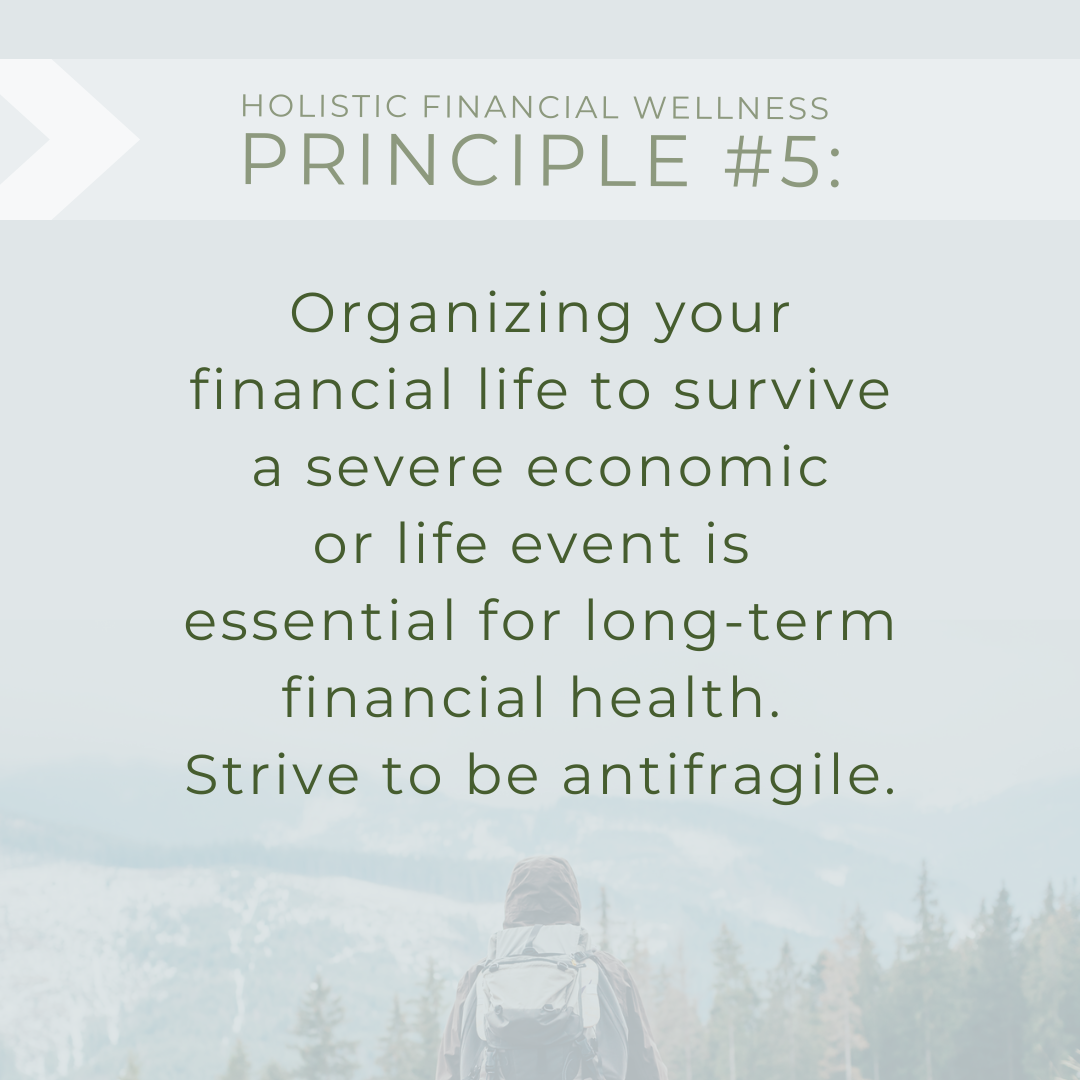
“Organizing your financial life to survive a severe economic or life event is essential for long-term financial health. Strive to be antifragile.”

What that means is first and foremost, that you should prepare to survive a potential Black Swan event, and second that you should try and structure your assets and liabilities in such a way that you benefit rather than suffer from the volatility that long term exposure to markets governed by fat tailed distributions will inevitably produce.

When the Financial Crisis of 2008 occurred, I was living and working in Paris, France and had the benefit of being able to watch the financial world crack and crumble from a safe distance. For the first time in my life, I realized that almost everyone who was responsible for “managing” our economy and keeping the global financial system operating didn’t know what was happening and, worse,  didn’t know how to stop the wildfire that was destroying corporations,  banks and even a giant insurance company (AIG) along with the financial lives of millions of people who were losing their homes, their jobs and even their pensions and retirement savings.

It is easy to forget how scary and uncertain those times were, and though our economy and the markets have recovered, the experience told me that not only can it happen again, but eventually it will happen again – not a “real estate bubble induced financial meltdown” but something else just as unexpected and just as world changing. When the Pandemic of 2020 came ashore and crashed our economy so severely that the country’s unemployment rate increased from under 4% to 14.7% in one month (something that had never happened before) I was ready, or, if not ready, at least prepared enough to not have to worry about by income or my ultimate financial survival.

Now that the economic crisis associated with COVID has passed, or at least morphed into something else, we are beginning to forget again how scared we all were about our money and our jobs and feel that things are getting back to normal – economically at least. Maybe so, but I still think the lessons of these two Black swan events should be incorporated into how we manage our financial lives and I believe that keeping Holistic Financial Wellness Principle #5 in mind can help.

So, what did I do to prepare, and why am I feeling ok financially?

It is because I took a “barbell” approach to my financial life to become antifragile and, through redundancy and insurance, made sure that if one part of my personal balance sheet disappeared, I would still have enough resources to sustain myself and rebuild anything that was lost.

I will tell you, in a minute, a little bit about what I did, but first I want to go slightly deeper into the insights that informed that strategy. From Dr. Taleb’s books I learned that

  1. Pronouncements by investment experts about the future behavior of many investment markets that are based on “historical patterns” including those based on capital market assumptions that come from  “sample means,  sample variances, and sample correlation coefficients” are almost certainly wrong because one of the statistical consequences of being in a fat tailed distribution is that you will never  be able to collect enough historical data to know just how likely or unlikely extreme returns (positive and negative) will be in a given market whether it be soy bean futures or cryptocurrency.
  2. The situation is not as hopeless as the above would suggest because it is possible to gain some insight into the nature and extent of the “fatness” of the tail of a given distribution, and, in particular, it is often possible to determine whether the likely nature of the distribution provides an opportunity for profiting from volatility

It is not at all obvious how to take advantage of item 2 from a theoretical perspective, but as a practical matter I believe that the concept of using a “barbell strategy” as I describe in Chapter 8 of Money Mountaineering is something to consider.

Beginning in early 2008 I started to model my financial strategy along these lines, first spreading my money among different banks eventually having significant percentages in 4 different major institutions. At the same time, I started to radically diversify my sources of retirement income, eventually obtaining Life Insurance and Annuities from 3 different major insurance companies as well as a Charitable Gift Annuity and a Charitable Remainder Trust from my old school which has an endowment of almost $500 million backstopping the life income that they will begin paying me when I turn 65. It goes without saying, that I also made sure that I had enough insurance to protect me against known contingencies like death, disability and other hazards that are more easily imagined (fire, theft, and being sued).

For the next few years, I didn’t worry too much about my long-term financial security. I had a secure and stable spot in the actuarial profession and was confident I would have enough income to meet my needs and then some until I had to stop working as a W-2 employee. That didn’t happen until 5 years ago, when in 2016, my company merged with another giant consulting/brokerage firm, and I decided to take early retirement.

As soon as I retired, I organized my financial life as two barbells. On the one hand I have a collection of diversified assets that will provide me with bullet-proof secure and steady income that will be enough for me to live on if I lose everything else. They include the annuities I described above, as well as cash value life insurance, the Pension benefits that I now receive from the companies I had worked for as an actuary and a an old 401(k) plan that is 100% invested in US TIPS (“Treasury Inflation Protected Securities”).

The above investments comprised a large percentage of my assets, so I don’t have a lot of extra cash to deploy to the other barbell, but what I did have, I deployed into highly speculative investments (mostly collectibles) whose payoff will likely follow “Pareto’s rule” –a form of fat tailed distribution where most of what you invest in earns nothing or less but every once in a while, you hit a “home run”. Since I didn’t have enough investable assets to construct a true second barbell (e.g., by becoming an “angel investor’ in multiple start-ups) I instead decided to invest my time in lots of different side ventures, most of which sill likely come to naught, but any one of which could substantially reward me if they are successful.  That is how I apply Holistic Financial Wellness Principle #5.

Get Ready for the Future

These days, Nassim Taleb continues to make his writing available to all who are curious to read about his ideas in real time. Specifically, if you go to academia.edu and follow him, you will be able to read many of his recent papers, both technical and not. Like many things in life, working through what Nassim Taleb has to offer the world is not easy, but for many of you it could represent a very smart investment of time and energy.

To provide one recent and particularly timely example, in June of this year, Dr. Taleb posted this paper about bitcoin:

https://www.academia.edu/49313911/Bitcoin_Currencies_and_Fragility

This one is not that difficult to read, but if you are not very “mathy” then the explanation of the paper posted by Michael Edesess on Advisor Perspectives in July explaining Dr. Taleb’s work should help. You can read it here:

https://www.advisorperspectives.com/articles/2021/07/18/why-nassim-taleb-says-bitcoin-is-worthless

In the last few years, many of my friends and colleagues have wondered why I speak about Nassim Taleb so frequently and with what is sometimes perceived as “missionary zeal”. I hope this essay has provided at least a partial answer.

The truth is that, if and when a true Apocalypse comes, none of what I or Dr. Taleb says will matter much, but until that day arrives, Dr. Taleb’s insights are well worth absorbing– particularly his understanding of the Fat Tailed Distributions in which we find ourselves embedded in. For me, the message is clear, and to paraphrase what I posted a while ago about risk management in a world governed by fat-tailed distributions:

“If you live your life believing that Life follows a Normal distribution, you will find that things almost never turn out as badly as you fear, except when they turn out much, much worse.”

But things can also turn out much, much better than you expect and that is where antifragility comes in.

Perhaps the best way I can explain my approach is to quote the advice my father used to give me throughout my childhood– “Hope for the best but prepare for the worst”. That and his advice to me shortly after I graduated college to “keep as many irons in the fire as you can” are two of the teachings that have allowed me to survive and thrive, in the world of money for over 40 years.

That, essentially is what Holistic Financial Wellness Principle #5 is all about.

Holistic Financial Wellness Principles: Principle #4 – Fear is the Enemy of Curiosity

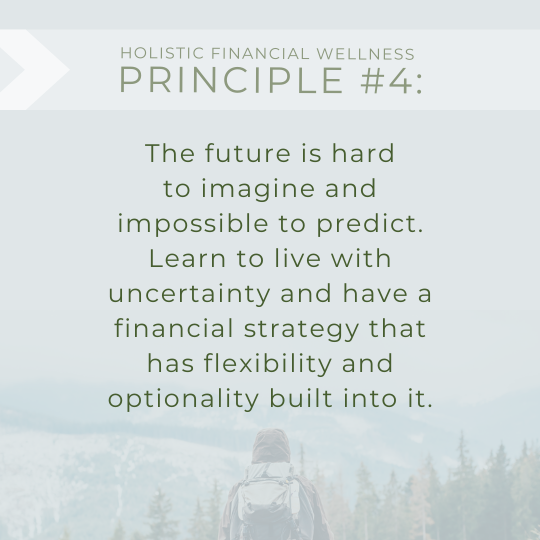
As I started to write about the 4th fundamental principle of Holistic Financial Wellness, I realized that while many of the 6 HFW principles I espouse are more and less applicable in our lives at different times, the need to be able to live comfortably with uncertainty as you make financial decisions that have  significant consequences for your future while also entailing painful costs in the present may be, for many, many people, the most important principle of all right now.

I considered lots of stories and lots of different aspects of making decisions under uncertainty to illustrate what I wrote in Section III of Money Mountaineering, but in the end I decided to address the “elephant in the room” and talk about the two parts of our human nature that can hijack our judgment and ability to make good financial decisions when the stakes are significant and the outcomes are multiple and highly uncertain.

.

.

Hustling Chess, Overcoming Fear and Getting Curious

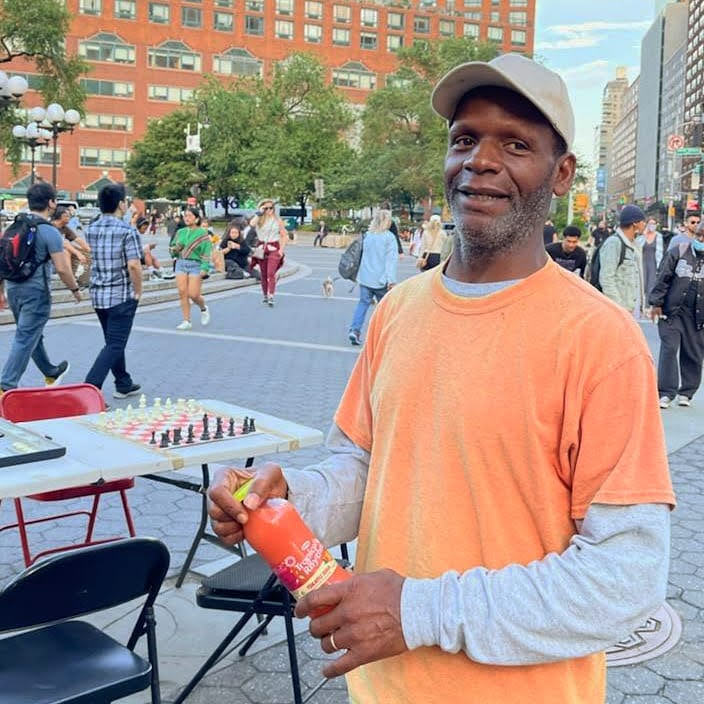
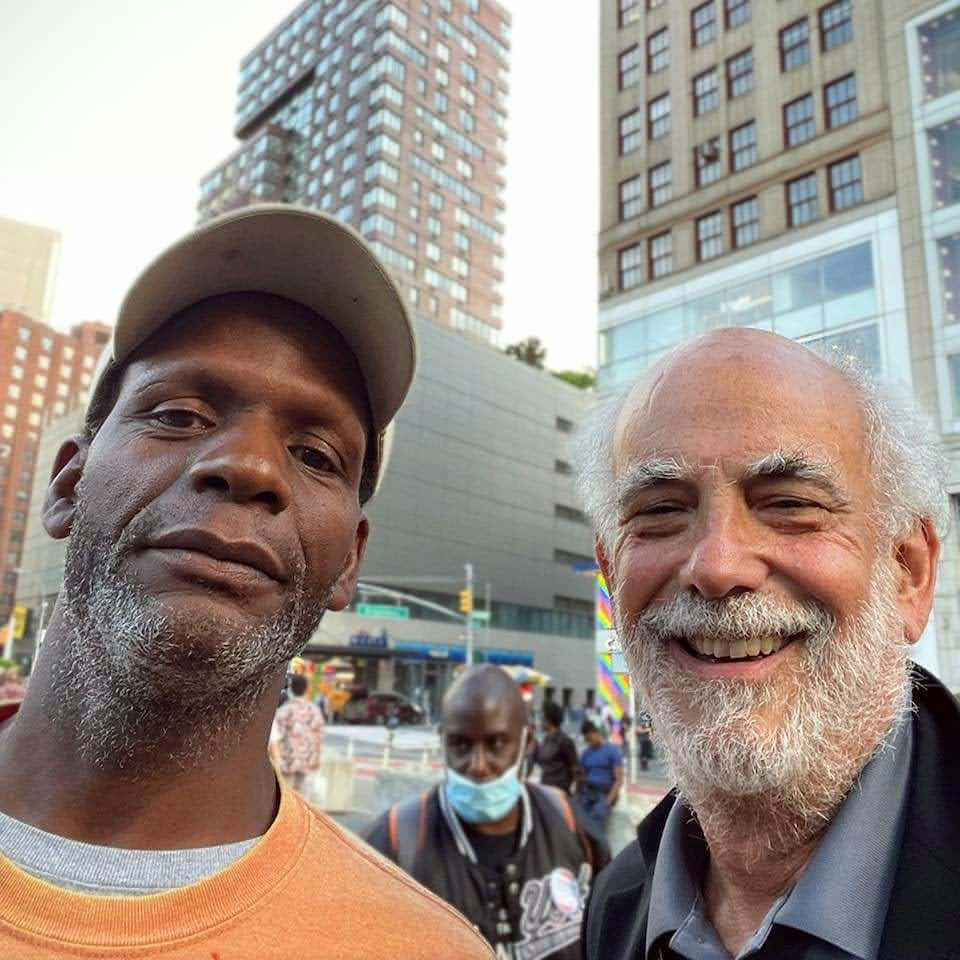
A few weeks ago, I went to New York City where I visited one of my favorite spots – the park at the south end of Union Square where the chess hustlers make their living charging nominal fees for lessons to those who appreciate their skills and winning money over the board from those who don’t. When I lived in Westchester and worked in NYC in the 1990’s I spent many hours getting to know these unusual characters and was able to learn a few traps and tactics that let me scare a few masters in the weekend tournaments I used to play in during my time in the City.

One of my favorite denizens of that world is a man named “Po” — a wise, funny and fast talking player of near International Master strength who never lets his customers know quite how strong he is. Po has beaten almost all of the current generation of young grandmasters, catching them as prodigies on the way up (e.g. Hikura Nakamura, Irina Krush and many others). To hear him tell it, his “lessons” helped a few future stars learn some practical tricks that fueled their rise to the top.

Like many great chess players, Po has a distinct world view and a well-articulated philosophy on how to survive on the chess board and in life. When I asked him what he thought of the current state of the world and what he suggested people do amidst all the confusion and chaos that seems to surround us, he paused and then gave me some wisdom that he passes on to both his friends and his customers. He said that the important thing was to not be afraid – not of your opponent or the all the unseen threats that might lurk on the board. He thought that most people are suffering now because “they opened their eyes and found that it is still too dark to see”.

For me, not only is that great advice, but it highlights perhaps the greatest challenge we face in living with “not knowing” and making good financial decisions despite all the uncertainty of the future and the incomplete information we have about the present.

Decisions over the chessboard are often not that different than the financial decisions I speak about in Money Mountaineering. Both entail making choices whose long term (and even short term) consequences are often impossible to predict and not even a grandmaster will be able to understand all of the aspects of a given position, let alone the plans and strategies hidden within the mind of the opponent sitting across the board. Curiosity and an ability to be openminded enough to consider many possible futures at one time is critical to becoming a good player.

For financial decisions this is even more important. Fear is the enemy of curiosity, and curiosity is what will allow you to identify the important things you can figure out and those that you can only make educated guesses about. It will help you identify the areas where a financial expert can explain aspects of your decision that you need to understand and will allow you to absorb the information that the expert provides. Overcoming fear and becoming curious will help you identify the aspects of your decision that can never be determined and allow you to make better choices.

As I learned from working with Annie Duke, whose expertise is poker not chess, the key is to make smart bets and then recognize that no bet on the future is a sure thing.

So, take it from Po. Even though you might be scared of the dark and can’t see what is down the road, that doesn’t mean you shouldn’t proceed forward, gathering the clues, getting help where you can and making the best financial decision you can with the information you have and the range of possible outcomes that the future presents.

Unfortunately, overcoming fear is not enough, and to truly be comfortable with “not knowing” you also need to overcome at least one other bit of psychological baggage that most of us carry, and for that I want to talk about what I learned from a different teacher.

Marilee Adams and the “Learner Mindset”

Marilee Adams is a writer friend who I got to know several years ago at a 3-day authors retreat sponsored by Berrett Kohler, the company that published my first book and several of Marilee’s. Marilee’s books have been hugely popular and despite our different statuses in the world of books and book sales, Marilee took an interest in my ideas and gave me a great deal of advice and support all throughout my process of writing Money Mountaineering.

In addition to having had the same publisher for our books, it seems that my suggested approach to the unknowability of the future is quite similar to aspects of Marilee’s advice on how to address uncertainty in general and how to gather enough information to make good decisions. As with many of my fellow authors, I had scanned Marilee’s book, but until this Spring I had never had the time to read it cover to cover.

That changed earlier this year when Marilee invited me to be a guest at one of her 4 week/8 session workshops on how to “Change Your Questions and Change your Life”. I didn’t have to think twice before accepting her generous offer because, in addition to the prospect of getting to watch how Marilee works her magic on large groups who flock to her usually sold-out workshops, I also sensed that her message to adopt a “Learner Mindset” when facing important life decisions might be very relevant to what is embodied in my 4th foundational principle of Holistic Financial Wellness. These two factors made it a very easy decision to devote the minimum 12-hour time investment to attending the workshop.

It turns out that adopting the Learner Mindset is not exactly the same as what I mean when I write about becoming comfortable with the uncertain future, but had I not gone to the workshop I would never have realized quite how important it is not to fall prey to anticipation, a state of mind that can lead you to make bad decisions – particularly financial ones.

Just like fear is the enemy of curiosity, I think anticipation is the enemy of open-mindedness. If you think you know what is going to happen (good or bad), then you can’t be open to the range of possible ways in which the future might unfold. And that is exactly what anticipation is — expecting something specific to happen while closing your mind to all the other possible paths the future might take.

This was not news to me, but during the workshop, Marilee went pretty deeply into what generates anticipation in us and what we should do to not let it bite us. And even though I have thought about uncertainty and how to deal with it for decades, I learned something important from Marilee and am grateful to her for reframing the problem of our tendency to think we know what will happen instead of what might happen in this way. She helped me understand in a deeper way one of the key things that cause us to sometimes lose our ability to think clearly and make good decisions in the face of an uncertain future.

That being said, my philosophy on the subject of uncertainty is, I believe, somewhat different than Marilee’s and in particular, I think we differ in our analysis of what allows us to overcome the fear and other obstacles that keep us from living comfortably in an uncertain world.

This is in no way a criticism of the value of what Marilee provides or the way she does it. For many people, Marilee’s approach to developing a “Learner Mind” is highly effective. The issue for me, however, is that in Marilee’s workshops (or at least the one I attended), there is a lot of homework, and I was asked to work harder than I was prepared to when I accepted her invitation.  For many, I realize that that, by itself, is a good thing, but in this case my personal idiosyncrasies prevented me from getting the full benefit of Marilee’s training.

My problem is that fundamentally I don’t like homework – I got away with not doing much in school and in many cases didn’t see the point of why it was assigned in the first place. My father and I had arguments about that, and like many things, he was more right than wrong in lecturing me for not doing my homework, but still, somehow, I came out ok.

Many believe that our minds can be trained to be curious, and maybe they can, but I think our ability to ask good questions can also come from a different source – specifically the wealth of natural curiosity that abounds within us, and just needs to be unlocked and allowed to emerge naturally.

For me, curiosity and disciplined practice/training just don’t mix, though just like Holistic Financial Wellness Principle #1 states, we are all unique individuals and different approaches to getting better at making good financial choices are appropriate for different people. Many of us welcome the discipline and skill development that Marilee imparts – and she is an extraordinarily good trainer in that regard, but I take a somewhat different approach to my own path to getting comfortable with “not knowing”.

Specifically, I believe that humans are at their best when they get in touch with that wild, playful, undisciplined adventurous side – a side that, if we were lucky, we enjoyed as a child and can still return to. For me at least, that’s where my curiosity lives.

So how do you get more curious and want to ask the questions you need to ask – about your job, your 401(k), your bank, or even cryptocurrency? I don’t believe there is a single answer to that question, but my approach is different than Marilee’s. Rather try to train myself to be curious, I simply listen to my own inner voice and pay attention to what I hear. Am I falling prey to anticipation when I think I know what is going to happen? Is it fear which keeps me from thinking about what might happen? Or is it a combination of both – throwing me off track as I hear myself say “I am afraid and don’t want to think about what I am sure will happen (in the market, the economy, my company, and even my family).”

It is also important to realize that being curious won’t necessarily help you to figure out what will happen next. Fundamentally, to make good financial decisions in an uncertain world, we need to remember that while the future is unpredictable it is not unimaginable. Being curious and open-minded is just the first necessary step towards financial wellness.

In the end, I believe that Marilee and I agree completely that to make better financial choices you need to be curious enough to ask the right questions and open-minded enough to listen to the answers.

That is what the Holistic Financial Wellness Principle #4 is all about.

Holistic Financial Wellness Principles: Principle #3 – Due Diligence

In my essay earlier this month about Holistic Financial Wellness Principle #1 I talked about the need to adapt to changes in your own financial or life situation to make sure the financial decisions you make are consistent with who you are and how you are situated in the world around you. In that essay, I talked about how the wildfire that destroyed my home last year and changed the way I now look at the decisions I make around money and the things I buy with it.

Today I want to talk about a different kind of change that is happening in the world around us and how it impacts the application of Holistic Financial Wellness Principle #3. That principle continues to be valid, but I believe that the way it should be applied, as I describe in Money Mountaineering, needs be expanded somewhat to accommodate the way the Economic/Investment/Advisor environment has changed in the last few years. The changes I speak to are not directly related to the pandemic, but have been emerging over the last few years, and, in my opinion, have recently become too important to ignore.

.

.

The importance of due diligence in an imperfect world

“ You know something is happening here but you don’t know what it is . Do you Mr. Jones?” – Bob Dylan  from “Ballad of a Thin Man

Like many others, my year of COVID isolation included getting to know (via Zoom) a lot of interesting people I would not have met otherwise, and Anthony was one of the more interesting. Anthony is a mortgage broker who makes his living from the commissions he collects on helping his clients obtain loans on the properties they own or are trying to purchase. On paper, he is exactly the kind of person, HFW#3 counsels being cautious of since it is pretty clear that his compensation is directly a function of the transactions he facilitates, and almost by definition his financial interests will not be completely congruent with those that he advises.

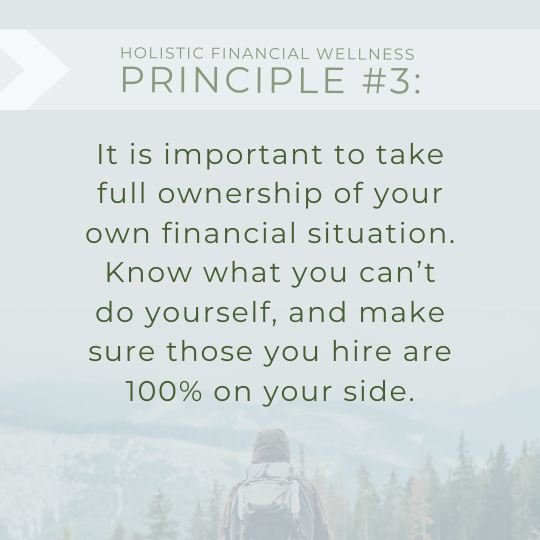
While that general advice is still valid, the significant and largely unseen changes that have occurred in the home loan market since the Financial Crisis and Housing crash a decade ago and a recent conversation with Anthony have caused me to reexamine and see that I need to expand on the last part of HFW#3 which says “…make sure those you hire are 100 percent on your side.”

Anthony is a member of what became a weekly discussion group consisting of myself and a group of mostly tech and finance-oriented individuals scattered across Northern California who a mutual friend organized during the pandemic when we all had time to think, converse, and think again. The topics we discussed each week were wide ranging and often quite personal. Throughout the Spring, Summer, and Fall of 2020 we got to know each other quite well, and though we no longer meet regularly, we have all come away with a better appreciation of the wider world of finance and technology that we each operate in.

The focus of our weekly discussions tended to move from person to person (there were 6 of us) and a few months after we started, I sent my new friends a near final draft of my book manuscript to help them to get to know me better and to collect their feedback which I knew would be both honest and helpful. I was not disappointed, as the feedback I received from all 5 helped make Money Mountaineering a better book. But while the others in the group validated and fully endorsed my 6 principles, Anthony told me that he thought HFW Principle #3 was wrong – at least when it comes to getting a mortgage for your home.

Not used to being told I was wrong, I got very curious. What exactly did I miss? He was happy to explain, and I wanted to very much know where he felt I’d made a mistake, but first I wanted to hear more of his professional story.

Anthony told me that in 1995, after a few false starts working for large commercial real estate firms he decided to sign up for a seminar given by Suze Orman, who was still personally conducting all the workshops on financial literacy that she designed and was beginning to write books about.

In Money Mountaineering, I tell Suze’s story, and it is a complicated one. While I believe that Ms. Orman’s books, and pronouncements today are likely to cause more harm than good, back in the mid 90s Suze Orman was teaching a lot of people how the world of money worked, and from everything I know about her, she was a good and caring person who truly wanted to help people do better with what they had. For Anthony, learning the fundamentals about how the world of money works by attending Suze’s seminar was a turning point in his career.

Shortly after completing the workshop, Anthony became a mortgage broker, and knowing too well the suffering that too much debt can cause, he steered his clients into loans that were responsible, prudent and designed to help his clients achieve their home ownership goals without putting their financial futures in peril.

From 1997 through the housing crash of 2008-9 and until today, Anthony has been guiding his clients on this path, never letting them get overleveraged, focusing on “education and trust” believing that a client who understands the debt he/she is assuming and can trust the expertise of the broker who is facilitating the loan, will make better decisions and will be happier for it.

What Anthony took issue with when he read my book was my contention that when it comes to mortgages, the compensation of the expert that we each must use to get our house financed is the most important factor for someone to consider. One of the recommendations I give in Money Mountaineering is that individuals should consider moving their retirement savings (IRA’s, etc.) to a big Bank that use a “relationship model” where they will have access to experts when they need them and in particular, can use loan officers who are paid a salary and do not receive commissions based on the loans they place.

Anthony pointed out that while that may have been true in the immediate aftermath of the Financial Crisis when Banks needed to restore trust in both their solvency and the people who provided financial services to their customers, it is not nearly as prevalent today as in the last several years. Many big banks have changed their business model and have become much more “transactional” in their approach to making loans and accumulating assets and liabilities for the firm’s balance sheet.

In addition, Anthony suggested that the “proprietary products” that the big banks offer their “premiere customers” (another recommendation in Money Mountaineering) are not necessarily that much better than the best loan that can be obtained from the wide array of lenders that a good independent mortgage broker like Anthony can find.

I think Anthony makes a very good point about the changing nature of how big banks do business, though at least in my experience, the best loans I have been able to attain for myself were still those given by my banks to their “premiere customers” and though that competitive advantage may disappear over time, it hasn’t yet.

On the other hand, I think Anthony’s experience and observations highlight a much more important aspect of how our world has changed. Specifically, in order to apply HFW#3 when it comes to finding an expert who will be compensated for the help they provide, you need to do your due diligence.

It’s Not Just Mortgages

One of the joys of being a writer is the opportunity to meet other writers and thinkers in your field who write good books. The first of my favorites is “A Capitalist’s Lament” by Leland Faust

and the second one is “The Big Investment Lie” by Michael Edesess

Leland is a top-notch tax lawyer and Michael is a serious mathematician, but both have worked behind the curtain for firms that provided investment advisory services. Then they both wrote books pulling the curtain back and letting their readers know exactly how Wall Street deals with the individual investor. They are not whistleblowers, but they are both truth tellers and that is something very valuable these days.

The truth about what goes on behind the scenes when we try to invest our money in a prudent way is sobering.

The sad fact is that the business models of almost all financial service firms seems to be getting opaquer and it is becoming increasingly more difficult for a consumer to understand what they are paying to whom and for what. Forget all the noise around Robin Hood, just consider the “zero commission” investment brokerage services that some giant well-established firms now use to lure investors to move their money. Here is a promise from Charles Schwab that you will be able to invest your money for “free” and yet still receive the benefits of the expertise and help a giant firm like Schwab can provide: schwab.com/pricing.

I have not taken the time to dig into exactly how Charles Schwab makes money on these “no fee” accounts, but I think it is almost a sure bet that Schwab is not doing this simply to provide the public with service that does not financially benefit them in some unseen way.

So, when you apply Holistic Financial Wellness Principe #3, make sure you do your due diligence.

It is not enough to just look at compensation structure of the experts from whom you seek help. These days it is too hard to “follow the money”. In the mortgage business the distinction between a commission and a “performance-based bonus” is getting too blurred for an outsider to discern without a great deal of analysis that almost no one has time for, and if you are dealing with an investment firm on the asset side of your balance sheet, following the money is exponentially more difficult.

On the other hand, the expert that you will need to turn to for help is, at least today, a human being and so, more important than the alignment of their compensation, it is the good will of the person(s) providing the help that you need to discern to know, not just whether an expert is 100% on your side, but to the extent they are not (and many times they are not), what of their interest you are competing with.

These days it is getting harder and harder to know what is happening behind the scenes in all areas of life, but at least transactions with money (and debt) are still executed by people, and therefore it is important to understand and learn as much as you can about the motivation, the expertise, and the good will of the people you will need to help you manage your financial life.

Many times, you will find that it is not all about the money, and as confusing and impenetrable as the wilderness is, it is still possible to find trail guides like Anthony who you can trust to guide you through the woods.

Before we ended our last conversation on the mortgage business, Anthony told me that he ascribes much of his success to the fact that he always took the time to get to know his clients as individuals– not just their financial situations, but who they were as people and what their goals, desires and fears were about the home they were about to purchase. He is not alone in wanting to get to know his clients as almost all financial services firms want to know as much as they can about the person who seeks their help, but I believe that due diligence works both ways and even if it wasn’t a part of HFW Principle #3, I think you will get better help and have fewer problems if you get to know the person who you have let into your financial life. 

Specifically, after you have determined that you actually need help, by all means try and find an expert whose financial interests align with yours and who you believe is on your side, but then try and go further. Get to know the person who you are going to for help, listen to their story of why they want to help you and try to understand what their real agenda is. Ask personal questions and make sure you listen carefully to the answers they give. In a perfect world we would be able to hire experts who are clearly and unequivocally on your side, but unfortunately the world is not perfect and getting less so every day.

Holistic Financial Wellness Principles: Principle #2 – Debts of Gratitude

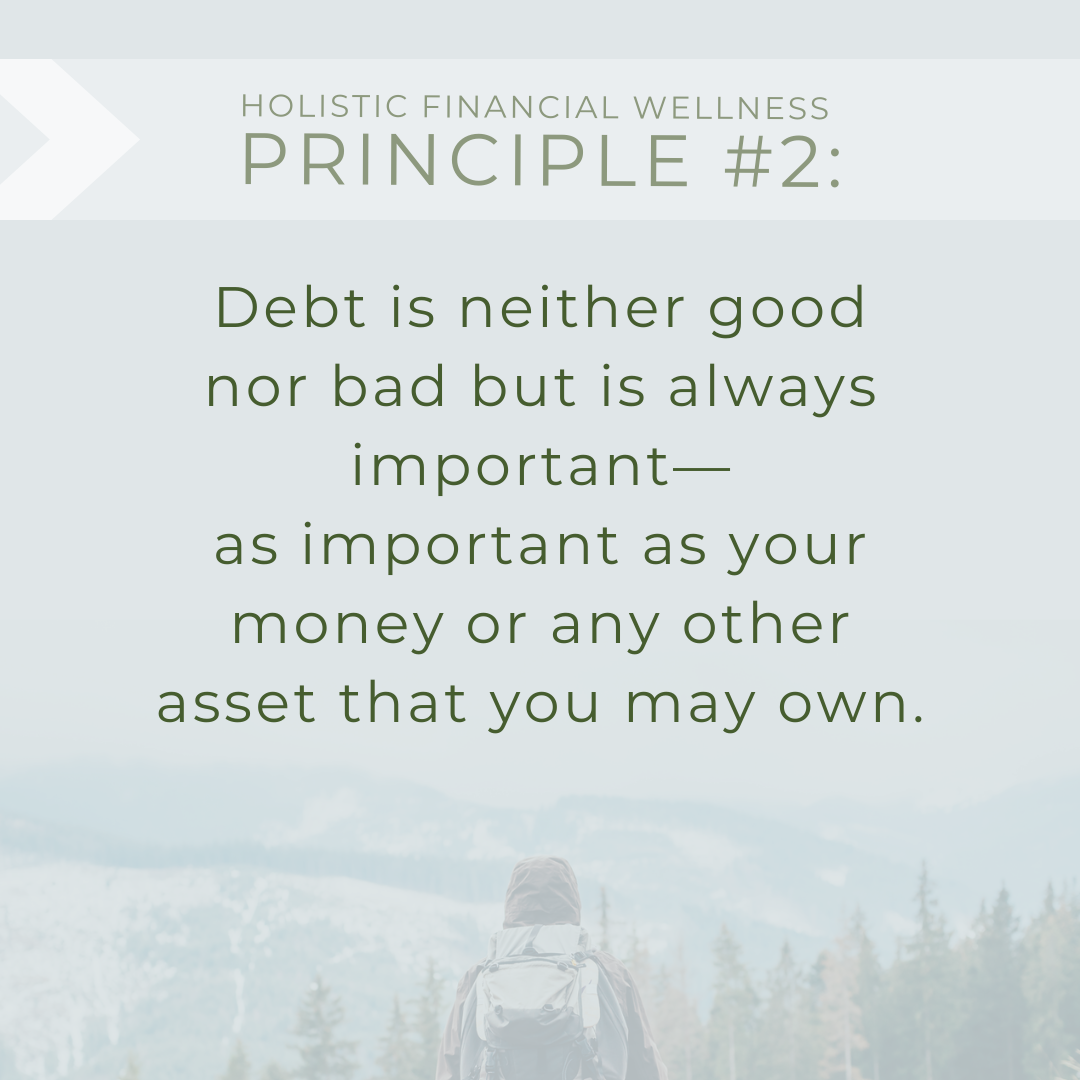
This is the second in a series of essays on the 6 Foundational Principles of Holistic Financial Wellness that I describe in my new book “Money Mountaineering”. In this one I want to talk about “Debt” in a more general sense. As we look at our personal financial balance sheets we have many obligations that might be satisfied by money, but many of those obligations were incurred through the receipt of goods, services that are often not measurable in dollars and that the terms of repayment are far from clear. How to view these debts and how they affect one’s financial well being is a very tricky issue and whole books could be written on the subject.

My goal here is to simply bring your attention to those liabilities and to both caution you against ignoring them, as default can lead to real financial problem, while at the same time recognizing that many of these liabilities can be satisfied using other assets at your disposal thereby contributing in a meaningful way to your overall financial well being.

.

.

Keeping the lights on with home cooked meals.

My neighborhood in the old West End of Santa Rosa is filled with old houses in serious need of repair. Many of my neighbors rent these houses from landlords who take a “just in time” approach to the maintenance of their properties or in some cases live in houses that are owned by family members who live in different towns.

Many of these neighbors come to me for financial advice and among the more difficult questions that they ask me is what to do when the material things in their lives break and need to be fixed so that they continue to work and have the basics we all need to survive (shelter, light, heat and running water).

It turns out that my actuarial training and facility in financial analysis is of limited use in solving their problems. Instead, an expanded view of what they need and what they have to offer others is required.

My friend Linda lives down the block from me in a house that is well over 100 years old. While the foundation, plumbing, and electrical systems are not quite that old, the house is in sore need of renovation.

The house is owned by another family member – Grandpa Joe who lives 60 miles away and is, himself, getting on in years, relying on the already reduced rent that Linda pays him to supplement his small pension and Social Security.

It’s not that Joe and Linda don’t have material assets that theoretically could be used to make the house safe and livable again. After all Joe owns the house and has only a minimal mortgage outstanding while Linda has accumulated 50 years’ worth of antiques and collectibles that these days have considerable monetary value. The problem is that converting those “real” assets into dollars is easier said than done, and when I looked at their situation, the numbers simply didn’t work.

However,  both Joe and Linda have many other assets that can be brought to bear on the problem. In particular, they each have many relationships that are extremely valuable. Specifically, Joe has many close friends who are skilled tradesmen (plumbers, electricians, carpenters, etc.) who are always looking for “side jobs”, and while Joe does not have skills that can be used here (he is a locksmith by trade), with these contacts, he was able to very quickly arrange for the house to be fixed. Many of these tradesmen have had their businesses helped by Joe and as a result are only too happy to pay off their “debts of gratitude” by coming by and assessing what work is needed to be done.

For her part, Linda is a spectacular cook and her holiday dinners are legendary among those who have been lucky enough to have attended one. And good food is only part of the reason that an invitation to Linda’s house is so sought after. The history, art and relics that fill Linda’s house are just as nourishing and tasty as the food she serves. Neither Joe nor Linda have the financial wherewithal to pay the cost of what typical home repair companies charge, but between the lunches, dinners and stories that the two of them provide, the crews that come to work on the house always feel well compensated for the services they provide.

And so, having had to admit that some problems can’t be solved with  actuarial analysis, I watched with fascination as a succession of vans and trucks came and went to Linda’s house while small crews of electricians, plumbers and carpenters rewired the house, upgraded the kitchen and replaced doors and drywall throughout the house, while the din of power tools, late 60’s music, and happy voices emanated from the little green house down the block beginning early in the morning and lasting until well past sunset.

It’s one thing to look at a Gift Economy from a distance and consider it as a system that may or may not be a viable alternative to one based on a free market principles. It’s quite another to watch it in action. Many believe in the Gift Economy and are trying to design and implement one for communities and organizations. I applaud that effort and hope that such efforts succeed, but I also think that change like this happens from the ground up, and just needs to be recognized and encouraged to grow whenever it naturally arises.

The truth is that all of us already participate in a Gift Economy in our own lives, even if it only encompasses what we do for our own families and close circle of friends. We all give to those we care about and we all owe debts of gratitude to those who have given to us.

So how do we account for these “assets” and “liabilities” on the karmic balance sheet of life? I would suggest that we don’t even try to measure them, but instead that we simply recognize when such obligations exist and understand that evening the scales will take time, energy and even sometimes “real” money, and that “investing” in giving to others will often yield a return that is far greater than any financial analysis will reveal.  In my opinion, the sooner we recognize that such non-monetary  exchanges of value are taking place and consider the gifts we give and receive as part of our overall financial situation, the closer we will come to achieving true holistic financial wellness.